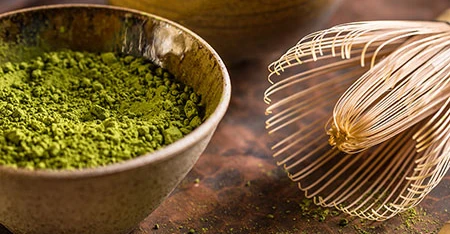
What is matcha?
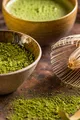
Matcha is a finely powdered green tea associated with Japanese tradition and the tea ceremony. It is made by grinding tencha, a tea produced from leaves shaded before harvesting and processed in a specific way.
Its distinctive feature is how it is prepared: the powder is whisked directly into water and consumed with the drink, rather than being removed after steeping.
What is matcha made from?
Pure matcha consists of leaves from the tea plant, Camellia sinensis, processed and ground into powder. It contains no milk or sugar: these ingredients are added in recipes such as matcha latte.
Always check the ingredients of your chosen product, especially when buying ready-made drink mixes.
How is matcha made?
Shade cultivation and harvesting
Before harvesting, the tea plants are shaded for several weeks, often around a month. This stage is a defining feature of growing leaves for tencha.
Steaming and drying
After harvesting, the leaves are steamed to stop oxidation, then dried without being rolled.
Refining and grinding
Stems and veins are removed during refining. The tencha is then finely ground, traditionally using stone mills, to produce matcha’s fine powder.
What does matcha taste like?
Matcha has vegetal and grassy notes, which may be accompanied by marine notes, sweetness and umami: a full, savoury taste.
The flavour varies with the product and preparation. Some matcha teas are smoother and more delicate, while others are stronger or more astringent. The ratio of powder to water also affects how the flavour is perceived.
In a matcha latte, milk softens the flavour and changes the balance of the tea’s notes.
What does matcha contain?
Matcha naturally contains caffeine, L-theanine and polyphenols, including catechins.
- Caffeine: naturally present in tea, the amount in your cup depends on the product and the quantity of powder used.
- L-theanine: an amino acid characteristic of tea that contributes to its flavour profile and umami notes.
- Catechins: compounds belonging to the polyphenol family, studied for their antioxidant activity.
The composition varies with the tea cultivar, growing conditions and processing. Because matcha is consumed together with the powder, you also consume leaf components that would not fully transfer into a regular tea infusion.
How to prepare matcha
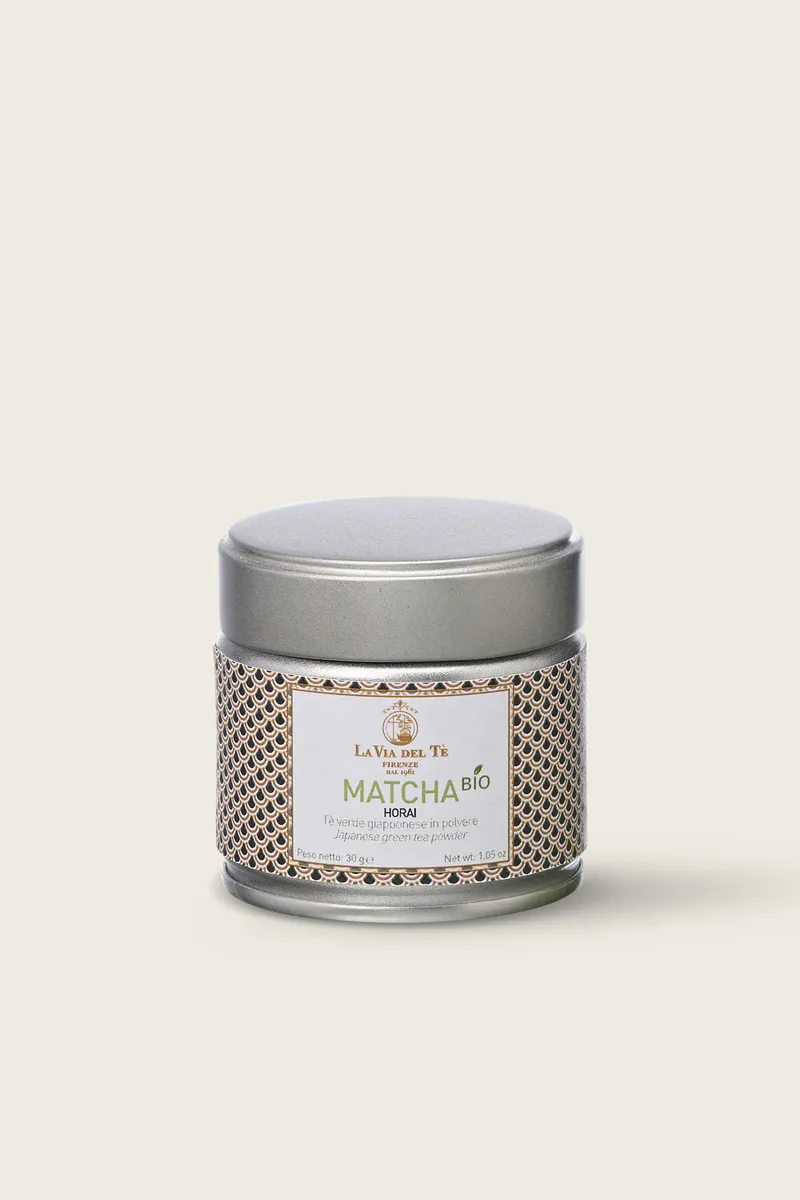
The product pages for our Izumi, Tsuki, Akashi and Horai matcha recommend 1 g of powder per 80 ml of water at 80 °C. Follow the instructions for your chosen product and adjust the preparation to your taste.
- Weigh and sift the matcha. Sift the powder into the bowl to break up any small lumps.
- Add the water. Pour in the recommended quantity at the indicated temperature.
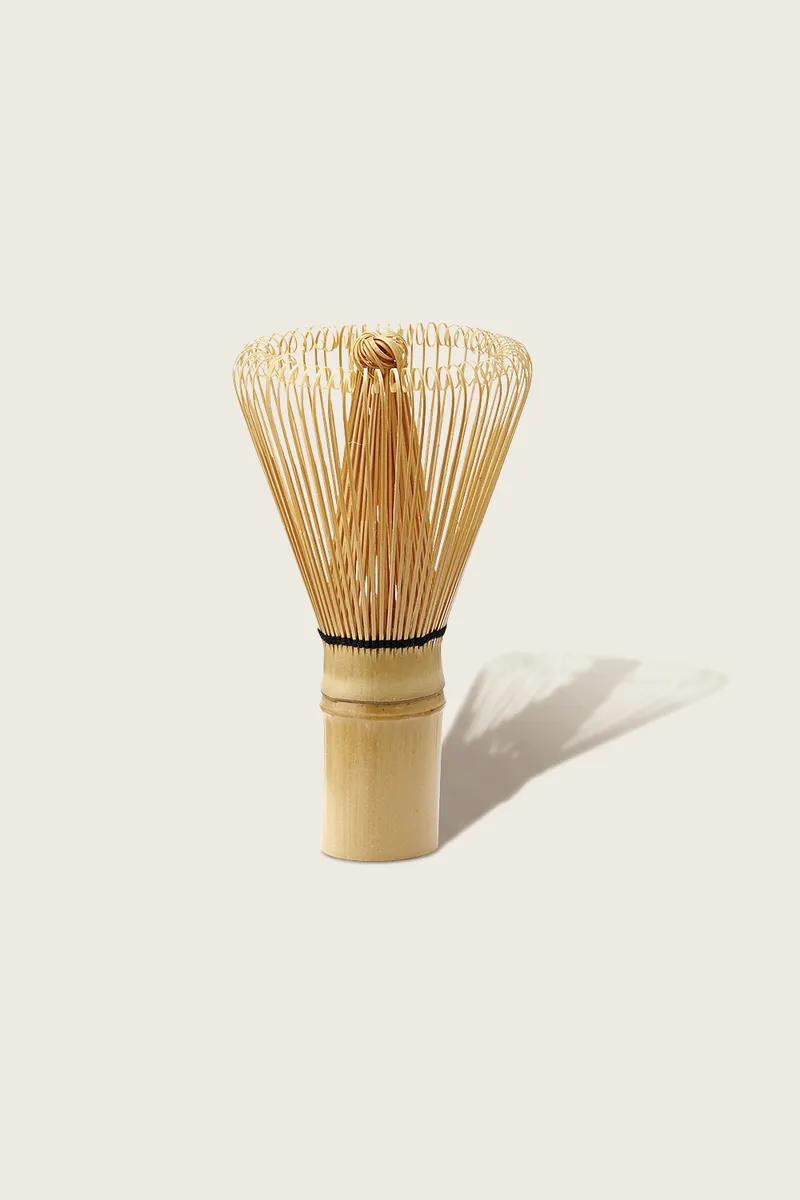
- Whisk with the chasen. Use quick back-and-forth zigzag movements until the drink is evenly mixed and lightly frothy.
- Enjoy your matcha. No straining is needed: the powder stays in the drink.
To avoid lumps, sift the powder before adding water and check that no clumps remain at the bottom of the bowl.
How to make an iced matcha latte
For a matcha latte, first prepare the tea with water, then combine it with milk. The proportions differ from those used for matcha prepared with water alone.
How to choose matcha for your needs
Start with the preparation you want to make, then compare the recommended uses, tasting notes and pack sizes.
- For drinking with water: explore Organic Matcha Akashi and Organic Matcha Horai, choosing the flavour profile that best suits your preferences.
- For both drinking and cooking: Organic Matcha Izumi is suitable for traditional preparation and as an ingredient in recipes.
- For desserts and other recipes: Organic Matcha Tsuki is intended for culinary use, including sauces, ice cream and chocolate.